
A 50-plot-a-year developer in the West Midlands. Family-owned, three generations in, the kind of regional builder that knows every site manager by name and still gets the same kitchen supplier the founder used in the eighties. Good people. Good homes. Five sites running at any one time.
When the Part L uplift hit in June 2022, they did what most builders their size did. They printed off the new requirements, called a meeting, sent the site managers on a course, and got on with it.
It didn’t go well.
The before
Part L compliance, in their business, lived on paper. Site managers filled in handover records on the plot, brought them back to the office on a Friday, and someone in admin keyed the relevant bits into a spreadsheet. The spreadsheet fed the as-built SAP calculation. The as-built SAP calculation went to the assessor. The assessor signed it off. The plot got its EPC.
This worked, in the loose sense that it produced certificates. What it didn’t do was produce evidence. If anyone asked how a particular plot had been built to its SAP design, you’d be looking at three pieces of paper in three different folders and the memory of a site manager who’d worked on six other plots since.
The June 2022 uplift made this fragile in a way it hadn’t been before. The new requirements brought tighter performance margins, more recorded checks at intermediate stages, and an expectation that the as-built matched the as-designed in ways you could actually demonstrate. The old workflow, which depended on a site manager remembering and an admin typing, started to crack.
The first sign was a near-miss. An assessor visited site mid-build, asked to see the recorded thermal bridging details for plot 7, and the site manager couldn’t find them. They were on a piece of paper that had gone home with the previous week’s records. The visit got rescheduled. The assessor was good-natured about it. The technical director was not.
The second sign was an internal audit they ran on themselves three months in. Out of fifteen completed plots since the uplift, they could properly evidence the full Part L chain on nine of them. The other six had gaps. Not failures, but gaps. Things they knew had been done, but couldn’t easily prove had been done. If the right person had asked the right question, they’d have been scrambling.
The technical director’s exact line in the post-mortem was: “We’re not failing. We’re getting away with it.”
The decision
The problem they identified wasn’t compliance knowledge. The site managers knew the regs. The assessor was good. The intent was right. What was missing was a system that captured Part L evidence at the point it happened, on the plot, by the person doing the work, in a way that didn’t depend on memory or paper or Friday afternoon admin.
They looked at three options. A bigger ERP-style platform that did everything including financials. A bolt-on snagging-and-compliance app. And HBP, which their MD had seen at a trade event two years earlier and bookmarked.
What sold them on HBP wasn’t the Part L feature in isolation. It was the realisation that Part L records sitting in their own system, separate from the rest of the build data, wouldn’t actually fix the problem. The problem wasn’t that they didn’t have a place to put records. The problem was that the records lived somewhere different from everything else. Adding another somewhere different wasn’t a solution.
They went with HBP and gave themselves a month to get the site teams onto it.
The change
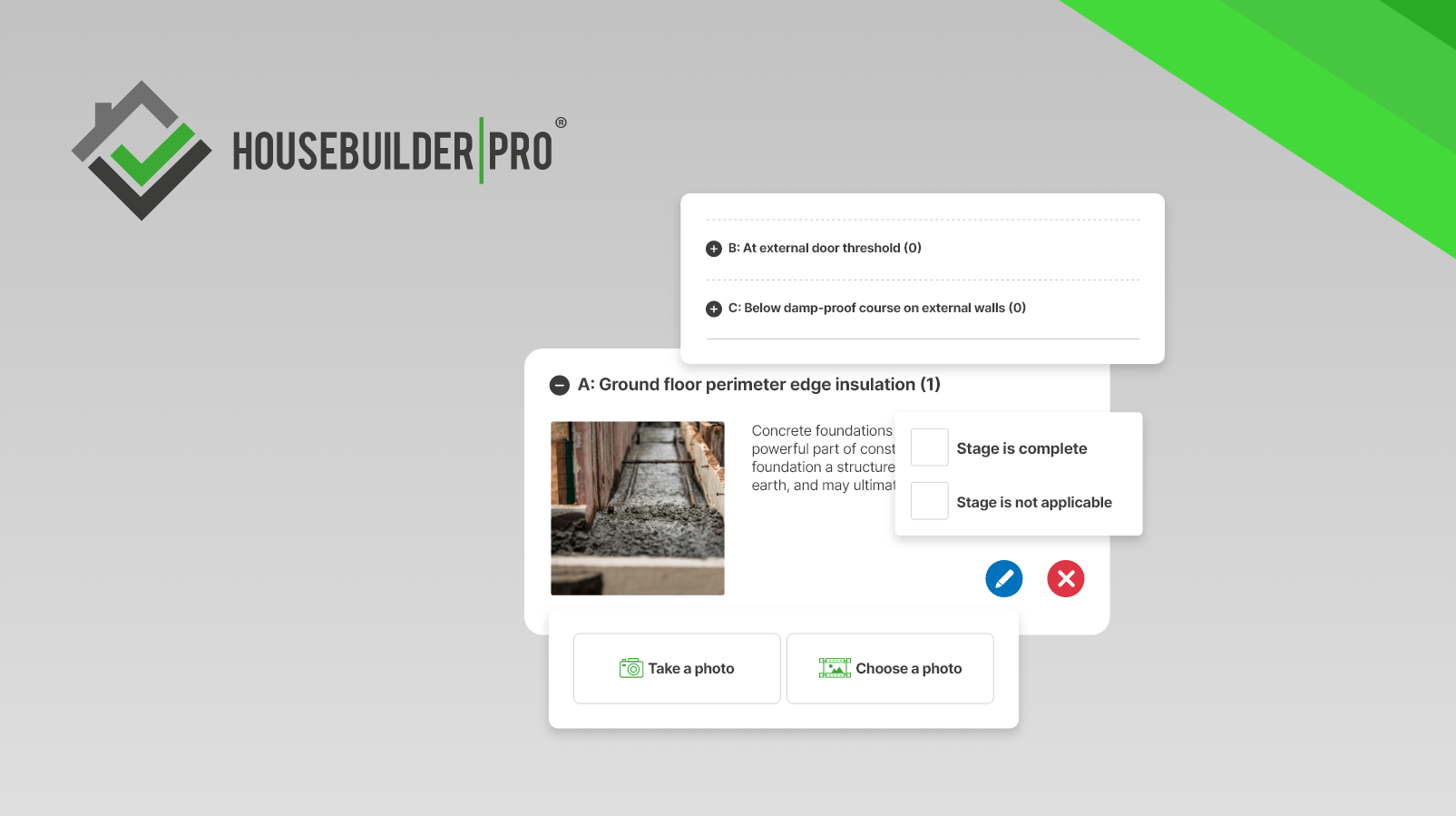
The mechanic was simple. The mobile app went on every site manager’s phone. Part L records got logged on the plot, by the site manager, at the time the work was checked. Each entry was tied to the plot record automatically, so the technical director could open any plot at any time and see exactly which checks had been logged, when, and by whom.
The site managers, who’d been the bit of the system everyone worried about, took to it faster than expected. The technical director’s theory was that the app was less work than the paper had been. You stood on the plot, you tapped a few times, you were done. No clipboard, no carry-back-to-the-office, no Friday afternoon catch-up.
The admin team’s role changed. They stopped being the bottleneck and started being the people who pulled the reports. The assessor got given a login. The next site visit, when the assessor asked for the thermal bridging records on a specific plot, the site manager pulled them up on a phone in fifteen seconds.
The result
A year in, they ran the same internal audit they’d run before. Fifteen plots since the changeover. Full evidence chain on all fifteen.
The technical director’s quote in the second post-mortem was: “We’re not getting away with it any more. We’re actually compliant.”
Beyond the audit, three quieter things had changed.
Site managers had stopped staying late on Fridays. The compliance admin role, which had been mostly Part L data entry, was redirected onto NHBC and customer-care work. And the relationship with the assessor improved, because the assessor had stopped chasing for paperwork and started using a system that gave them what they needed when they asked for it.
Five years on, they’re still on HBP. Other things about their business have changed. The Part L workflow hasn’t, except that the regs themselves have moved on twice. Each time, they’ve adjusted what they record. The system has held.
When the MD describes the move now, he says it wasn’t really a Part L decision. It was a decision about whether the business should be running compliance on paper or in software. Once they framed it that way, the answer wasn’t difficult.
Everyone, as he puts it, loves it.
Request a demo
Find out more about Housebuilder Pro, the only complete new homes management system designed and developed to accelerate your business.
Book via